
Patch-Day Support Chaos: Predict, Prevent, and Recover Fast
Launches and patches create predictable support spikes. Learn incident-style playbooks to reduce repeat tickets and protect player experience.
1) Why patch day breaks support (and why it’s predictable)

Patch day isn’t “random chaos”—it’s a repeatable pattern where patch-management changes collide with fragile real-world setups. The same failure modes show up across PC and console: disconnect spikes after backend toggles, corrupted installs from interrupted downloads, and authentication loops when tokens, entitlements, or cross-play flags drift out of sync. When players can’t get in, they don’t wait politely; they churn, refund, or review-bomb, turning a technical hiccup into a player-experience crisis.
The real problem in game-support is fragmentation. Players bounce between a launcher FAQ, a social post, and a generic ticket form—then repeat the same story while agents ask for logs, network details, and repro steps. That back-and-forth is exactly what Respawn Support Services is built to eliminate: guided triage that routes by game/platform/error code, diagnostics capture (opt-in crash logs, network stats, system info), and seamless escalation to chat/email/voice with evidence auto-attached. Treat patch day like incident-response: predictable inputs, rapid triage, and feedback loops that harden the next release.
2) Predict and prevent: pre-patch risk scoring, canaries, and comms templates
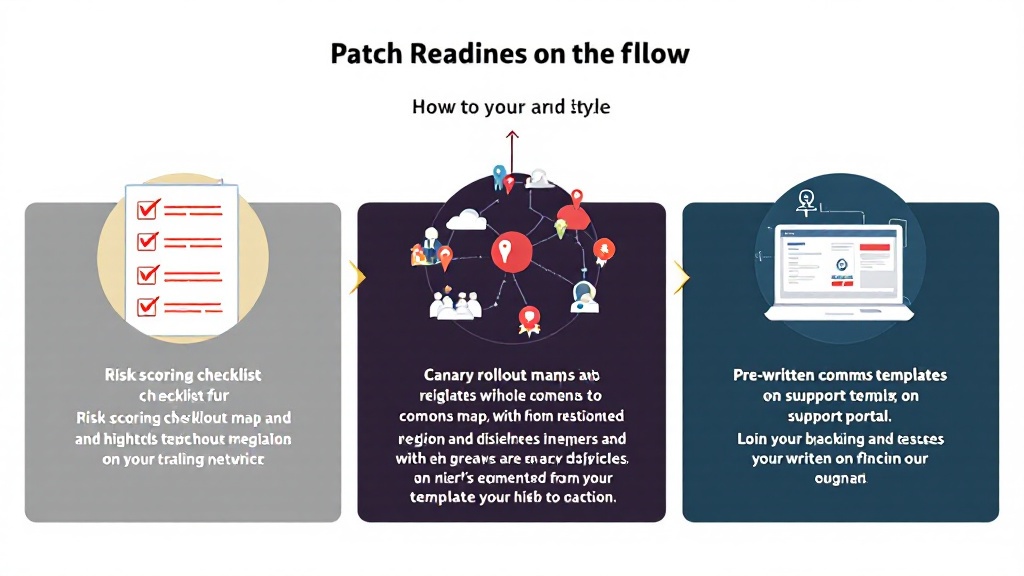
Preparation starts before code ships. Build a pre-patch risk score that combines: change surface area (netcode, auth, matchmaking), platform impact (console cert constraints, driver variability on PC), and historical ticket drivers (NAT types, ISP regions, specific error codes). In live-ops, that score determines what you pre-write, pre-test, and pre-position in your knowledge base: patch-tagged articles, decision-tree checklists, and diagnostics that can confirm likely causes in under a minute.
Then reduce blast radius with canary rollouts—by region, platform, or cohort—so you can watch disconnect rates, install failures, and login latency before full release. Pair canaries with comms templates that are ready to publish within five minutes: “We’re investigating,” “Workaround steps,” “What data to include,” and “Next update at X.” A managed helpdesk like Respawn Support Services can route players into guided triage, capture the right evidence automatically, and push consistent status messaging across chat, email, and voice. The result: fewer duplicate tickets and faster stabilization when incident-response ramps up.
3) Recover fast and learn faster: diagnostics-driven escalation and postmortems that stick

When the spike hits, speed comes from structure. Route players through guided triage by game/platform/issue, and capture diagnostics up front—crash dumps, launcher logs, network stats, and account signals—so agents don’t waste cycles asking basic questions. That’s where diagnostics-driven game-support shines: the player completes a checklist, the system attaches evidence automatically, and escalation to a human via chat or voice starts with context. For complex cases, optional screen-share shortens time-to-resolution by letting agents verify router/NAT settings or launcher permissions in real time.
The most overlooked step is the postmortem. Don’t just list “what happened”; translate findings into durable assets that reduce repeat tickets next patch: new patch-tagged articles, updated triage branches, better error-code mapping, and proactive in-client messaging for known issues. Track “top 10 ticket drivers” and ensure each has (1) a diagnostic, (2) a clear workaround, and (3) an owner before the next release. That closes the loop between patch-management, incident-response, and player-experience, turning patch day from chaos into a disciplined live-ops routine.